
Posted
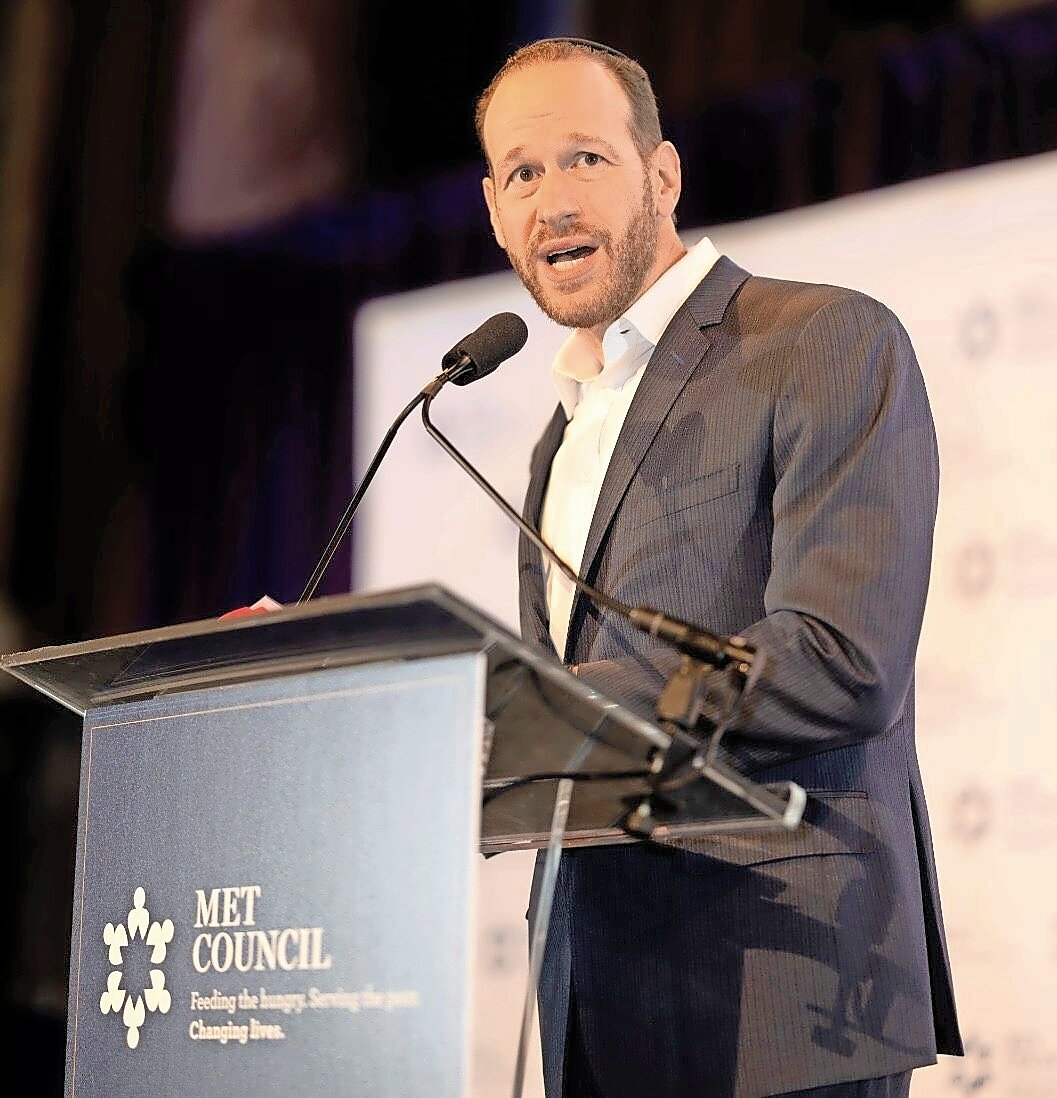
Met Council CEO David Greenfield at the group’s annual Legislative Breakfast on May 31.
David Greenfield, chief executive officer of Met Council, believes that nonprofit leaders have a choice when it comes to artificial intelligence: learn how to use it or risk being left behind.
“We’re the first organization in the country that’s told our staff we’re not going to lay anyone off because of AI,” he told JNS following a June 4 artificial intelligence summit hosted by the Met Council and the Robin Hood Foundation on June 4. “We believe that AI should be used to help people. It should be human-centered, and it really should be a tool rather than a replacement.”
Greenfield, who leads the largest US Jewish nonprofit that fights poverty, said that nonprofits must learn to harness AI while ensuring it remains a tool for workers rather than replacing them.
Met Council is training employees in AI, paying staff two hours per week to learn the technology and providing each department with an AI budget to experiment with new tools, he said, noting that the organization recently developed a digital food pantry that uses artificial intelligence to predict demand and route deliveries and an in-house intake bot named “Reggie.” The bot helps connect clients with the appropriate Met Council department, whether they are seeking food assistance, senior housing, domestic violence services or Holocaust survivor support.
“We have to be competitive the same way for-profit businesses are, and we want to make sure our clients are being handled faster, that they’re happy and getting the best experience they can get,” Greenfield said.
If people lost their jobs, were abused by spouses or are homeless, Met Council will not rely on technology to make decisions about how to help them, according to Greenfield. “We’re not relying on technology to make decisions,” he said. “We’re going to rely on technology to assist us.”
The technology has allowed Met Council to expand its reach this year from 325,000 people to more than 350,000 without adding to staff members’ workload.
“Nobody went to social work school for six years to become a social worker, so they could spend five of 10 hours a day filling out paperwork,” he said. “To the extent that we can get rid of the paperwork, get rid of the bureaucracy and really focus on the issues that matter, we’re able to make it a better experience for our staff.”
Gov. Kathy Hochul appointed him to a new artificial intelligence FutureWorks Commission, which is tasked with advising the state on its response to the impact artificial intelligence has on the workforce and economy, he said.
One of the panel’s main goals is to “put the people and the humans back into the AI conversation,” he said. “I think it’s very important that we protect individuals’ jobs and their autonomy.”
“Ideas like universal basic income are not good ideas,” he said. “The idea that we’re going to pay you $1,000 to stay home for the rest of your life is a terrible idea. People want to wake up in the morning. They want to have something to do. They want to be part of a society. They want to feel like they’re accomplishing things.”
Greenfield told last week’s event that his fear that artificial intelligence will concentrate wealth and power in the hands of a small number of technology companies “keeps him up at night.”
“I really think they’re creating a society where a quarter of 1% is going to amass all of the wealth and then all of the power,” he said. “They’re literally telling everybody. They’re not even being shy about it. They’re saying, ‘We’re gonna take away your jobs. We’re gonna give you $1,000 a month. Just stay at home and be happy, be fortunate to live in our AI utopia’.”
Many recent college graduates are struggling to find entry-level work as companies increasingly turn to AI, Greenfield said.
“We have college-educated students who have graduated and can’t find jobs. A lot of that is due to AI and the fact that AI is fast replacing entry-level work.”
“That’s not good for society. That’s not good for humans. That’s not good for any of us,” he continued. “I think we have to push back, and I think one of the ways to push back is to model how we use AI for good.”